
Skip to content

Fredrika Frenkiel

Brand strategist and marketing technology operations leader. Award winning campaigns, built to run as systems.

I'm Fredrika Frenkiel, a marketing operations leader who designs AI-native creative systems, combining brand strategy, growth, and agentic automation, built from inside the business, not sold to it from outside.

Chaos
Step 01 / 06Insight

It starts with signals, not assets. Data, customer behaviour, market context, internal friction.

PROMPT:make somethingfor summer
Aa
ConceptDirectionToneMessage
People want clarityin a complex world.
ResearchCopyVisualsFormats
AI / AutomationOrganise. Adapt. Optimise.
One idea0 / 6 formats
1:1
9:16
16:9
Web
CRM
Paid social

Same brand, every format, every market. Data drives decisions, systems drive scale.

An interactive diagram: scattered creative fragments on the left are structured by an AI and automation layer in the middle, producing on-brand assets in every format and market on the right, with the process still running.
0%
More creative output
0%
Lower production budget
$0M+
P&L owned
0+
People led, 14 cities

Same brand standards, at 450% of the output and 7% of the budget. Press ⌘K to jump anywhere on this page.

At a glance

I'm Head of Studio & AI Creative Operations at Lunar, a Nordic fintech, where I lead brand, creative and production operations across Sweden, Denmark and Norway, and I sit on Lunar's AI Board.

Based in
Stockholm, Sweden. Remote or on site
Reach
Nordic focus today (SE, DK, NO), global remote experience
Currently
Head of Studio & AI Creative Operations, Lunar
Also
Founder, Code of Alfred (AI strategy collective)
Works on
Operating models, martech and AI stacks, creative production
Languages
Swedish, English

Fifteen years, two disciplines

Strategy and the system underneath it. I have led both, at global scale.

Multi-million campaigns for global brands, awarded at Cannes Lions and Guldägget, with the operating models, martech and AI workflows that made the results repeatable. Pharma, banking and finance, FMCG, pharmacy retail, luxury and fashion, IKEA-scale home, Toyota and Volvo, P&G: regulated categories and high volume brand machines alike. Agency side and in-house, and on the whole journey from strategy and social through film and TV production to launch and measurement. Based in Stockholm, working globally: Nordic focus today, with teams and productions run across the world, remote and on site.

Brand strategy & creative leadership

Fifteen years of positioning, campaign platforms and creative direction for global brands. Multi-million campaigns taken from strategy through production to market across the Nordics, Europe and global rollouts.

  • P&G
  • Toyota
  • H&M
  • Volvo
  • Mastercard
  • Visa
  • Discovery

Marketing technology & operations

The build layer: operating models, martech and AI stacks, workflow architecture, DAM and pipeline design, capacity planning and measurement. I design the system that makes the strategy repeatable.

  • Operating models
  • Martech stacks
  • AI workflows
  • DAM
  • Automation
  • Analytics
Cannes Lions
Awarded work at the industry's highest bar
Guldägget
Sweden's leading creative award
$30M+ P&L
Owned and grown across agency and in-house
110+ people
Led across 14 cities

Industries and categories I know from the inside

Regulated, high volume, premium. I have shipped in all three.

Pharma, health & pharmacy retail
Regulated categories where every claim, asset and approval step has to hold up to review.
Banking, fintech & financial services
In-house inside a licensed Nordic bank today: brand, performance and compliance in the same pipeline.
FMCG & retail at volume
High-frequency category work for global brands including P&G, with hundreds of assets per cycle.
Automotive
Toyota and Volvo: global platforms adapted into Nordic markets without losing the master idea.
Fashion, luxury & lifestyle
H&M, Eton and Gant: premium craft standards, seasonal cadence and heavy production volume.
Home, furniture & interior
IKEA-scale category thinking: mass reach, many markets, one recognisable brand voice.
Travel, media & entertainment
Apollo, Aftonbladet, Discovery Network, Uber, the Olympics: always-on content and campaign rhythm.

What I am extremely good at

Content, from strategy to volume

Content is my home discipline. I set the strategy, build the editorial engine, and run the production that fills it: brand films, social formats, campaign content and always-on editorial across markets and languages. I have made content for global platforms and for regulated categories, and I have rebuilt the machine that produces it so quality holds when volume multiplies.

Social, trends and performance

I read culture and platform behaviour fast, and I run the numbers behind it: creative testing, always-on social, paid performance and the feedback loop that turns results into the next brief. Trend spotting is only worth something when it reaches market in days, not quarters.

Film, TV and production, hands-on

Long experience across film and content production, TVC and broadcast, from script and casting to shoot, post, versioning and delivery. I have produced, run studios and owned production P&L, so I know exactly what a plan costs and what it takes to land.

In-house and agency, both sides

Agency leadership across Saatchi & Saatchi, McCann, Geelmuyden.Kiese and Edisen, and in-house leadership inside a Nordic bank. I know how briefs are sold, and how they are actually absorbed on the client side.

I transform marketing departments

I go in with the team, map how work really moves, rebuild the operating model, then stay through adoption. Strategy, plan, build, launch, measure: I am on the whole journey, not just the slide at the start.

Content expertise

Content is not a deliverable to me. It is a system with an output.

I have built and run content operations from both the agency and the in-house side: strategy, editorial planning, production at volume, localisation and performance. Below is how I break it down when I go into an organisation.

Content strategy
Audience, message hierarchy and channel role, turned into a content plan the whole organisation can plan against instead of a wish list.
Editorial and always-on
Content calendars, formats and cadence per channel and per market, with a clear split between hero campaigns, always-on editorial and reactive social.
Production at volume
One shoot or one concept, versioned into hundreds of assets across markets, formats and languages, without the brand drifting.
AI-assisted content engines
Briefing, drafting, brand QA and localisation built as a system, which is exactly what Copyfriend does: native output per channel and market, not translated leftovers.
Performance and iteration
Content judged on what it does: creative testing, winners scaled, losers cut, and results fed back into the next brief.
Governance and rights
Tone of voice, claims, disclosure and asset rights handled inside the workflow, which is what makes volume safe in regulated categories.

Career, in order

One thing runs through every role below: P&L ownership, people leadership and hiring, strategy, and execution all the way to launch. In each position I have carried the numbers, built and led the team, set the direction, and then delivered the work myself with them. Agency and in-house, Nordic and global.

  • P&L and budget ownership
  • People leadership and hiring
  • Strategy and operating model
  • Execution and launch
  • Client and stakeholder ownership
  1. 2024, present

    Lunar

    Head of Studio & AI Creative Operations

    Brand, creative and production across SE, DK and NO. Marketing Leadership Team and AI Board.

  2. 2023, present

    Code of Alfred

    Founder & AI Enabler

    An independent AI strategy practice, run in parallel with the operating role.

  3. 2019, 2023

    Edisen / Orb

    Head of Commercial & Global Content Production

    Strategy, business development and P&L for multi-million-dollar clients on a proprietary DAM platform.

  4. 2017, 2019

    Geelmuyden.Kiese

    Head of Project Management

    Mastercard Europe, Uber, the Olympics, Discovery Network, L'Oréal, Canon. Company financials, cost reduction, workflow efficiency.

  5. 2015, 2017

    Tillsammans Sthlm / Lydia Group

    Head of Production

    Nordic growth and clients including Apollo, Aftonbladet, Zmarta, Eton and Gant.

  6. 2013, 2015

    Saatchi & Saatchi

    Digital Producer & Account Manager

    Procter & Gamble and Toyota, local and global briefs; Nordic single point of contact for the network.

  7. 2010, 2011

    McCann

    Account Manager

    The agency apprenticeship: how client work is actually scoped, sold and delivered.

  8. 2009, 2012

    Stylein

    eCommerce Manager

    Long-term stretch at the Stockholm fashion house: online growth, eCommerce operations and digital marketing.

Scroll sideways for the full career

Education

  • Hyper Island

    Digital leadership and business transformation

  • Berghs School of Communication

    Communication and creative strategy

  • ARU Certified

    Marketing Law

  • UGL

    Certified leadership and group dynamics programme

What marketing organisations are up against

The problem isn't the technology. It's the operating model underneath it.

The mandate-without-structure problem.

Leadership tells teams to “use AI more,” but nobody has redesigned the workflow underneath it, so usage stays scattered, inconsistent, and impossible to measure.

The single-point-of-failure problem.

Brand consistency, process knowledge, and quality control often live in one or two people's heads, which means the organisation is one resignation away from losing control of its own standards.

The compliance-without-runway problem.

Regulation arrives with weeks of notice, not months. The EU AI Act's disclosure requirements are the clearest recent example, and most marketing organisations have no process built to absorb that kind of deadline without disrupting production.

The wrong-person-for-the-job problem.

Solving this requires someone who understands both the business and the technical layer, but organisations typically have technical people who don't understand marketing operations, or marketing strategists who can't build anything themselves. Almost nobody sits at the intersection, which is exactly why the gap doesn't close on its own.

These aren't AI problems. They're operating-model problems that AI adoption is currently exposing, which is why fixing them requires someone who starts with the business, not the tool.

How I help

How I help brands, agencies & organizations.

I turn scattered AI usage into one operating model.

Workflows, decision rights and governance the whole marketing organisation runs on, instead of a handful of individuals with clever prompts.

I protect the brand while output multiplies.

Standards encoded into the production system itself, so consistency survives 10x volume, new markets and staff turnover.

I build the technical layer myself.

Agentic workflows, prompt infrastructure and automation shipped hands-on, no waiting for an external vendor to interpret marketing for you.

Manual chaos vs AI-powered system

LiveBuilt by me

Switch the model. Watch the waste disappear.

Left: the same brief handled by people, memory and manual chasing. Right: the same brief handled by smart, AI-powered tools I build, where intake, planning, brand control and reporting run themselves. Same team, same budget, a fraction of the time, iterations and cost.

People and memory own the workflow

Work moves through disconnected tools, assumptions and manual follow-ups. Time and money leak at every hand-off.

  1. 01Brief lands in a Slack thread3 h lost · no owner
  2. 02Timeline invented backwards5 days slip · guesswork
  3. 03Assets scattered in four toolsrework · version 7b
  4. 04Brand checked from memorybottleneck · one person
  5. 05Status asked, never known6 pings · manual chase
  6. 06Result reported by feelingno learning · no baseline
6 days
Brief to delivery
3
Revision rounds
233%
Output capacity
112 h
Manual hours per month

At full automation that is roughly 126 manual hours back every month, four fewer revision rounds per campaign and a team that produces four times the output without growing. That is where the money is.

Tap to switch between manual and AI-powered.

Recognise your own organisation in the left column? That is the conversation I have every week.

Send me an email

Problem by problem

Ten problems I recognise, and how I solve them.

Pick the one that sounds like your organisation. Each is a real structural problem, not a tooling gap, and each has an approach and an outcome attached.

Problem

The organisation needs someone who understands both the marketing strategy and the technical build, and can't find that person.

My approach

This is the actual gap my background closes: agency and growth strategy experience first, then technical AI systems built to solve problems I already understood from the strategy side.

Outcome

The operating model gets designed correctly the first time, instead of a strategist and a builder negotiating a translation between them.

01 / 10 · use the arrow keys

How I think

Business first. Process second. Technology last.

Step one

Understand the business first.

Where is time, money, or quality actually being lost? When marketing plans in silos and then hands a three-month project to production with a five-day deadline, that isn't a creative problem, it's a process failure.

Step two

Design the process before the tool.

Decide what a system should own and what a person must own, before writing a line of automation. The split has to be explicit enough to survive a real production calendar.

Step three

Build the technical layer last.

Agentic workflows, LLM systems and automation come only once the business logic is already correct, otherwise you've automated the wrong thing, faster.

Most people who build AI tools start at step three. I start at step one.

Live system builder

Pick a problem. Watch the operating model get built.

This is the sequence I actually run: intake before automation, decision rights before tooling, reporting from day one. Choose the problem that sounds like your organisation and the model assembles stage by stage, with the ownership split made explicit.

LiveBuilt by me

My read

The failure is upstream of production. Nothing gets fixed by writing briefs faster, so the model starts by making scope visible before work is accepted.

Model not built yet

0 days
Brief to production
0%
Late-stage rescopes
0%
Scope visible upfront
  1. 01

    Structured intake

    System owns

    One form, one shape. Objective, audience, market, deadline and dependencies captured before anything is accepted.

  2. 02

    Scope and capacity check

    System owns

    The request is scored against the team's real capacity that week, and conflicts surface immediately instead of at handover.

  3. 03

    Go or renegotiate

    Human owns

    A person decides what moves and what gets renegotiated. The system never silently accepts an impossible timeline.

  4. 04

    Automated routing

    System owns

    Approved work triggers the next stage on its own, with owners, assets and deadlines already attached.

  5. 05

    Weekly reporting

    Shared owns

    Lead time, revision rounds and rejected scope tracked from day one, so the change is provable later.

Systems I have designed and built

The systems I build, and one step of them running live.

Three examples out of hundreds. I have specified, designed and built bespoke tools for very different teams, budgets and realities: a content engine, a full marketing operating system, and a brand governance layer. Start with the live brief generator, then pick a system to see how it works.

Examples, not a catalogue

I never ship the same build twice. Over the years I have built hundreds of custom tools, workflows and automations, each one shaped around the actual need, the existing stack and the way that specific team works. The three below are picked because they are easy to show, not because they are the whole list.

CaseBuilt by meLive
CaseBuilt by meLive
Context
Briefs arriving as one long paragraph
My role
Specified, designed and built it
Built
Brief intake, structuring model, readiness scoring
Result
Intake takes minutes, not a meeting
Year
2025

Type a messy brief. Watch it become a plan.

Not a mockup and not a video. This is the first stage of a real brief-intake workflow, running live in your browser. Paste something half-finished and see what comes back.

If you want something like this shaped around your business, that is exactly what I do.

Send me an email

Technical depth

The technical layer, in my own words.

I design agentic workflows, not single automations: multi-step chains where each step hands structured output to the next. The pattern in its simplest form, a brief is submitted, then structured and tagged, then a project is created, then the right people are notified, removes the manual shepherding that consumes most of the time between creative steps.

I treat prompts as infrastructure rather than inputs: reusable, chainable and versioned, so a workflow behaves the same way regardless of who runs it. That is what turns a personal productivity trick into something a 30-person marketing organisation can depend on.

The operating model I use is explicit about ownership: AI owns generation, structuring, scaling and pattern analysis. Humans own judgment, prioritisation, relationships and final sign-off. Making that boundary explicit is what makes teams adopt the system instead of resisting it.

My tech stack, hands-on and daily

AI models and assistants

  • Claude
  • OpenAI / GPT
  • Gemini
  • Perplexity
  • Mistral
  • ElevenLabs
  • NotebookLM

Build and automation

  • Lovable
  • Zapier
  • Make
  • n8n
  • Airtable
  • Notion AI
  • Slack
  • Linear

Creative and production

  • Figma
  • Artlist
  • Kaiber
  • Midjourney
  • Runway
  • Adobe Firefly
  • Canva
  • Descript

Data, growth and governance

  • HubSpot
  • Braze
  • Klaviyo
  • Amplitude
  • GA4
  • Semrush
  • Bynder
  • Frontify
  • Vanta

I stay hands-on with the stack rather than reading about it, and I evaluate new tooling the same way as an AI Board member: what is substantively useful versus what is hype. That is why I can pick the shortest path between a business need and a working system instead of adopting tools reactively.

Governance is built in from the start. I sit on Lunar's AI Board, the formal body defining AI adoption principles across the marketing organisation, and I keep current working knowledge of the frameworks that apply inside a licensed bank: GDPR across SE, DK and NO, the EU AI Act and financial-services compliance. The systems I build are compliant by design rather than retrofitted after a legal review flags a problem, and the processes are updated continuously as regulation, tools and team needs shift.

The long-form versions of how I work live in the guides.

AI Readiness Diagnostic

Apply the framework to your own team. It takes under a minute.

Five questions about how your organisation actually works, not about which tools you own.

Question 1 of 5

When a brief lands, how much of it has already been structured before it reaches production?

Code of Alfred

A repeatable discipline, not a one-company fluke.

Code of Alfred is my own AI strategy collective, founded in 2023, helping organisations understand, implement and scale AI in how their marketing teams actually operate. It is not a side project: it runs as a parallel, ongoing practice alongside my operating role, which means the two continuously inform and stress-test each other.

Practical AI training that drives change

Tailored AI learning journeys that get teams from zero confidence to daily use, in plain language, with real use cases rather than generic tool demos.

Intelligent content systems

Frameworks that combine automation with brand consistency, so output scales without losing what makes a brand recognisable.

Change enablement that sticks

Explicit organisational change management: stakeholder alignment, resistance management and adoption design. Going inside an organisation, finding the actual bottleneck and rebuilding the workflow around it, rather than bolting a tool onto a broken process.

Get in touch

Brand strategist and marketing operations builder.

Fifteen years across film and production, performance, ecommerce and analytics, inhouse and agency, for global brands. Based in Stockholm, working across the Nordics and remote worldwide.

I map how the work actually moves, name the friction that costs weeks and budget, then build the system myself and launch it with the team. Strategy and build in the same pair of hands.

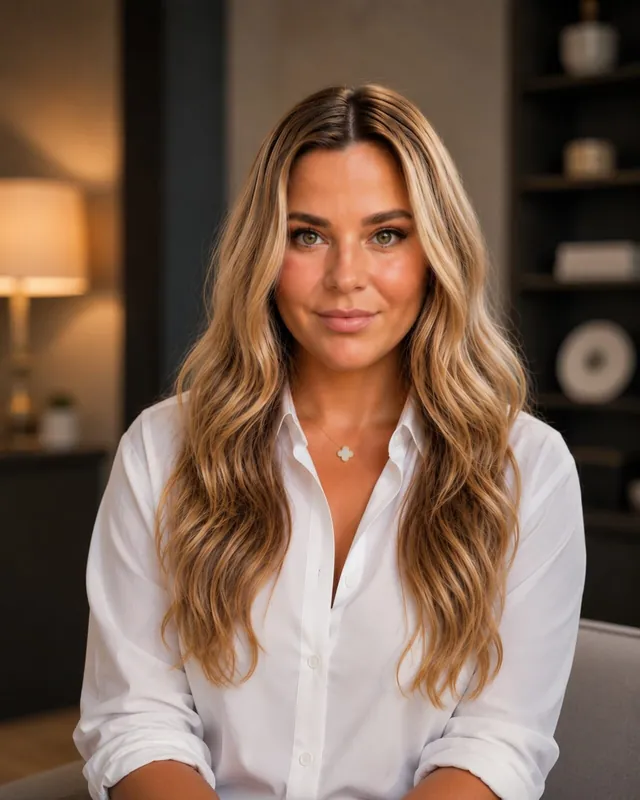
Fredrika Frenkiel, marketing operations and AI systems lead, based in Stockholm
Fredrika Frenkiel, Stockholm

Roles this experience maps to: Head of Marketing Operations, Head of Studio & Creative Operations, AI Transformation Lead, Director of Marketing Technology, Head of AI Enablement, and Change Management Lead for marketing & creative organisations. Stockholm-based, working across Sweden, Denmark and Norway.